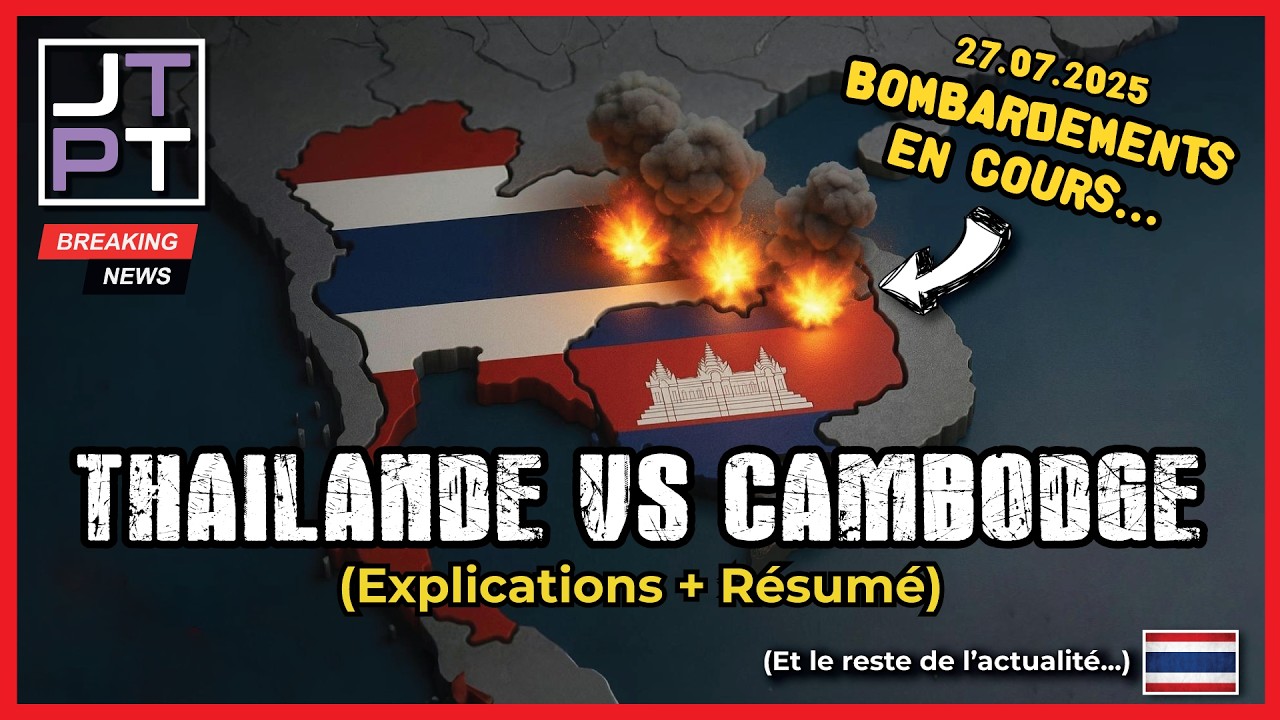
Conflict between Thailand and Cambodia: A worrying escalation
Delving into the resurgence of the Thai-Cambodian conflict, this article traces the tumultuous history of this rivalry, the tragic impact of recent events, while addressing issues of diplomacy and security in the region.

Editor
Conflict between Thailand and Cambodia: A worrying escalation
Recently, tensions between Thailand and Cambodia have reached a new level of violence, raising concerns not only for the inhabitants of the border regions, but for all of Southeast Asia. In this article, we review the history of this conflict, its current hot issues, and the implications of this escalation for both nations.
A look back at the history of the conflict
The roots of the discord between Thailand and Cambodia date back to the 19th century, when the race for colonization in Asia saw France establish its protectorate over Cambodia in 1863. Key events followed, including treaties imposed by France on Thailand between 1904 and 1917, where several Cambodian provinces were ceded. World War II temporarily changed the situation, with Thailand taking control of these territories under Japanese occupation.
The situation stabilized after Cambodia's independence in 1953, but tensions persisted around ethnic groups and historical sites, such as the Preah Vihear temple. In 1962, the International Court of Justice ruled in favor of Cambodia, but the territorial dispute continued to exacerbate relations.
The climate of tension exploded in 2008 with the inscription of the temple on the UNESCO World Heritage List, leading to armed clashes that cost the lives of many soldiers and civilians.
The latest escalations of violence
The situation has escalated alarmingly recently, with armed clashes leading to loss of life on both sides. Rumors of excavations of a trench by Cambodians triggered exchanges of fire. On May 28, 2025, a Cambodian soldier was killed, marking the renewal of violence. Landmines, attributed by Thailand to Cambodian troops, injured several Thai soldiers, reinforcing the spiral of anger.
On July 24, a Cambodian offensive used a missile launcher truck, targeting targets on Thai territory. The response was immediate, with Thailand bombing Cambodian positions. In total, dozens of civilian casualties have been reported, including children, which has raised outrage due to potential violations of international law.
The role of the international community
As part of the search for solutions, ASEAN has proposed to play a mediating role. The Thai Prime Minister, in communication with Anwar Ibrahim, a Malaysian leader, confirmed an intention to engage in negotiations, although the atmosphere remains tense. Cambodia insists on Thailand's responsibility in this situation, complicating discussions.
Military stakes and the imbalance of forces
An essential aspect to understand is the military imbalance between the two nations. In the global ranking of armies, Thailand ranks 25th, while Cambodia is far behind, in 95th position. This balance of power raises questions about the balance of exchanges, with Thailand's technological capabilities giving it a tactical advantage.
The repercussions on the population and the local economy
This conflict has direct consequences on the lives of the inhabitants of the border regions. Approximately 100,000 people have been displaced, seeking refuge in safer places such as stadiums and public buildings. Local economies are also suffering, as infrastructure is targeted. The sponsors of these acts are often criticized for their refusal to address genuine military behavior.
Typhoon Wipa and its tragic consequences
In parallel with the hostilities between the two nations, the region was also affected by Typhoon Wipa, which caused several casualties. Tragic accidents at sea, including a shipwreck in Ha Long Bay in Vietnam and deaths in Thailand, are reminders of the frequent natural hazards during the typhoon season.
The DTV visa and its growing popularity
In a less conflictual register, Thailand celebrates the first anniversary of the DTV visa, a project intended for digital nomads. This visa has met with unexpected success, attracting more than 35,000 applicants. This mechanism is part of Thailand's efforts to encourage alternative lifestyles and diversify its economy.
Laughter as an antidote
Despite the crises, French gastronomy is even invited into Thai convenience stores such as 7-Eleven, bringing a little comfort and taste for expatriates and locals. This shows how much French culture has taken root in the Thai landscape.
A united and committed community
Our Franco-Thai community plays a vital role in maintaining links in these difficult times. Community initiatives, such as the Facebook group dedicated to Thailand, strengthen interactions and exchanges between cultures.
Conclusion: what future for Thailand and Cambodia?
The road ahead seems uncertain. Hostilities are likely to continue as long as misguided political choices are made on both sides. The humanitarian implications of this conflict are worrying and will undoubtedly attract international attention. In the meantime, the situation requires constant vigilance and efforts for peace.
If you would like to support my work, you can contribute on Patreon or Tipeee.