Thailand Under Tension: Mines on the Border, Drones, Harsh Weather, and Senior Citizen Scams - Everything You Need to Know This Week
Barbed wire installed on the Thai side, controversial images of mines, drones on the border, turbulent weather, rumors about pensions, struggling cinemas, a new stadium in Bangkok, and a strong euro: the JTPT provides an update with verified information, practical advice, and key points.

Editor
Thailand Under Tension: Mines on the Border, Drones, Harsh Weather, and Senior Citizen Scams - The Reliable Guide of the Week
While the monsoon washes over the beaches and rice paddies, another swell rises at the borders: barbed wire, drones, accusations of mines. Between military caution, media frenzy, and citizens who just want to live normally, it is necessary to separate the truth from the noise. Here is the state of affairs, sourced and useful, with our practical guides (politics, weather, culture, economy) to understand Thailand this week.
Thailand–Cambodia Border: A Fragile Ceasefire Under Surveillance
The bilateral ceasefire, with 13 points of conduct, still holds, but it is cracking in places. On the Thai side, the army has reinforced the land borders with barbed wire to materialize sensitive areas. Problem: the reference mapping is not the same according to Bangkok and Phnom Penh. Thailand relies in part on maps dating from 1907; Cambodia disputes this, recalling the routes from the Indochinese period. This historical ambiguity maintains a potential for permanent friction.
On the ground, the signals are mixed:
- Drones: 94 devices were detected in several northeastern provinces, including 25 to 30 near the border, some having crossed the airspace. The authorities have changed the prohibition regime: according to The Thaiger media, flights are authorized from August 16 to 31, from 6 a.m. to 6 p.m., except in border areas, under martial law and near airports. Absolute caution, therefore, and essential local verification before any take-off.
- Military presence: Cambodian soldiers were observed near Thai positions, before retreating. No clashes reported, but patrols cross paths at a distance, which fuels mistrust.
- Clearing of mined land: demining teams have secured 269 border areas; 43 remain to be treated. At the same time, 256 households received emergency aid in four provinces, mobilizing local authorities, the army and NGOs.
A sign of appeasement? Not yet. The Thai command confirms that the key posts remain closed for the time being, and advises against any civilian presence in the border areas. It is better to postpone any travel to the bordering towns, on the Thai or Cambodian side.
Anti-Personnel Mines: A Highly Inflammable Subject
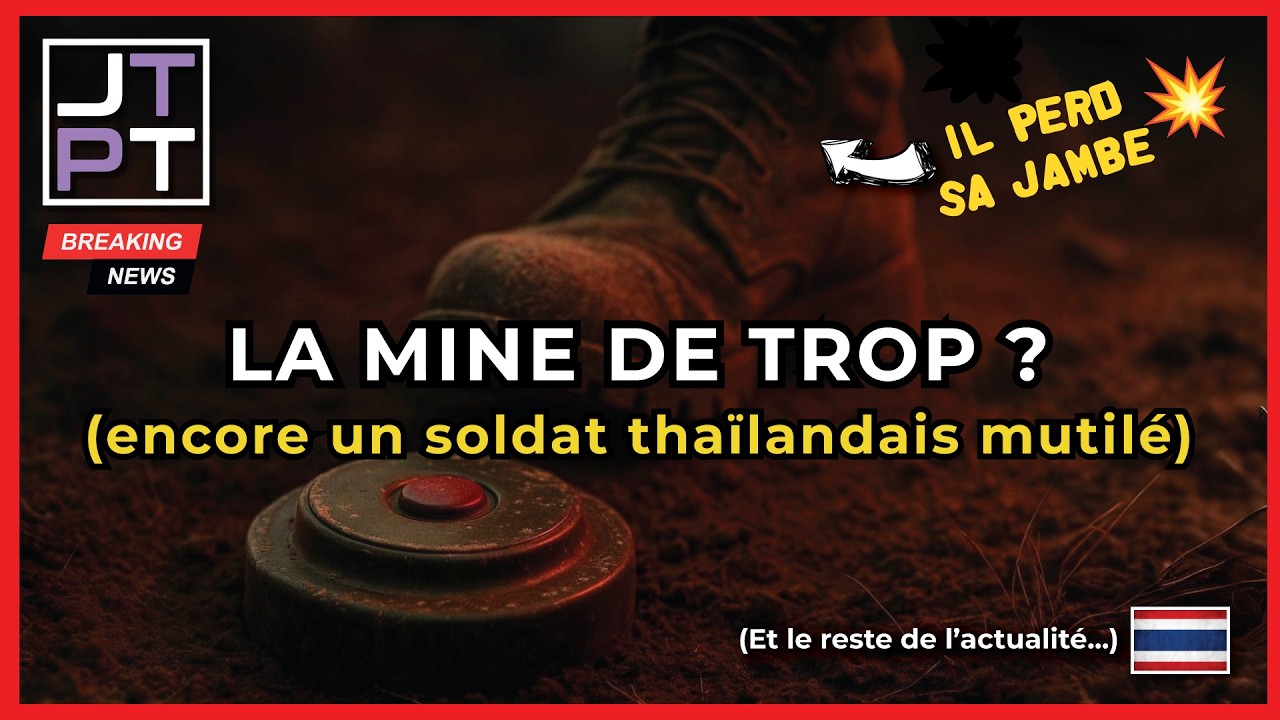
The week was marked by another serious accident: a Thai soldier lost a leg after hitting a mine during an operation to lay barbed wire and patrol. This is, according to the reports relayed, the fourth recent major injury attributed to explosive devices on the ground.
The legal context, however, is unambiguous: Cambodia and Thailand are committed to the Ottawa Convention, which prohibits the use, production and storage of anti-personnel mines. Officially, Phnom Penh denies any laying of new mines and assures that it scrupulously respects its international obligations.
On the networks, images presented as evidence of the presence of Soviet-type PMN-2 mines near a disputed temple have circulated, as well as a video where one would see a soldier installing a device. These elements are not independently authenticated at the time of writing; they are categorically rejected by the Cambodian authorities. In a climate of disinformation and psychological warfare, caution is required: sharing an unverified image can fuel tension and put lives in danger.
On the operational level, the Thai army indicates that it is continuing an intensive mesh of risk areas and asks the public to report any suspicious discovery without approaching it. In the event of observation of a potentially explosive object: do not touch, mark at a distance if possible, immediately alert the authorities.
Barbed Wire and Budgetary Question: The Call for Donations Reframed
The installation of kilometers of barbed wire is expensive. A call for contributions from the public from military circles triggered a mini-controversy: interim Prime Minister Pumtham Wechayachai disapproved of the initiative and recalled that the army had to go through state budgetary channels to avoid any confusion. Message received: defense is not financed by passing the hat. If individuals nevertheless wish to donate equipment that they already own, it is recommended to rely on official procedures, via local units and after logistical validation.
The Temple of Ta Kwai, Symbol of National Pride
Another point of tension: Thai General Bunsin mentioned his desire to "reconquer" the temple of Ta Kwai, described as a "Thai fortress", despite its location on the side recognized by Phnom Penh. Previous attempts have failed, the site being backed by a Cambodian base and surrounded by minefields. The general is due to retire in September; it is unlikely, according to several sources, that he will take the initiative to break the ceasefire at the end of his term. But these statements maintain, by ricochet, a rhetoric of firmness on both sides.
For observers, these border temples play an identity role far wider than their economic value. They are markers of sovereignty, and therefore possible sparks in a dry prairie. In the immediate future, the key indicator to watch remains strict compliance with the 13 ceasefire measures, especially cooperation in demining.
Domestic Politics: The Shinawatra Case Returns to the Forefront
The judicial calendar promises to be busy for the Shinawatra family:
- Thaksin Shinawatra: returned to Thailand in 2023 after years of exile, the former Prime Minister faces a crucial hearing on August 22 in a procedure related to the lese-majeste law. Between predictions of a new flight and the hypothesis of a stay in the p...